
The Shrinking Canadian Housing Dream: When Detached Houses Are Out of Reach, Townhouses Become the New Middle-Class Baseline
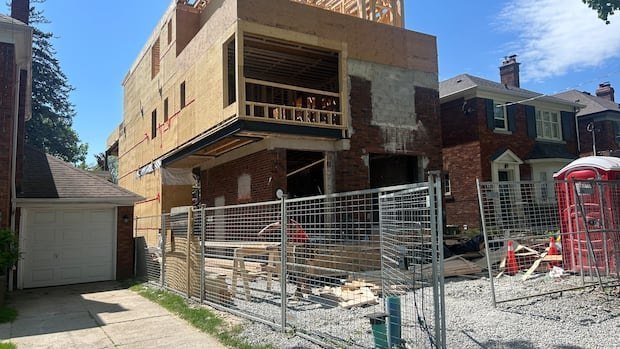
The Shrinking Canadian Housing Dream: When Detached Houses Are Out of Reach, Townhouses Become the New Middle-Class Baseline
Market Snapshot · June 9, 2026
*Published: HousingAI.ca | Data through May 2026 (including May MoM updates)*
Executive Summary (Data-Verified)
Townhouses are rapidly becoming the actual主力 (mainstay) option for middle-class families seeking ground-oriented freehold housing across Canada’s five major cities — Vancouver, Toronto, Calgary, Montreal, and Ottawa. As of the latest May-June 2026 data, townhouse prices sit at 50%-73% of detached house prices, while delivering 3-4 bedrooms, garage, and a private yard — the core functions that Canadian families prioritize.
On the policy front, Missing Middle Housing reforms have become fully institutionalized at federal, provincial, and municipal levels. On the market side, ground-oriented housing demand remains robust. The structural upgrade path has permanently shifted from “Condo → Detached” to “Condo → Townhouse → Long-Term Hold.”
This report draws on CREA, CMHC, RBC, WOWA, and Teranet data as of June 8, 2026.
Section 1: The Price Gap — Townhouses at 50%-73% of Detached Prices
Townhouses deliver the essential family features — 3-4 bedrooms, garage, yard — at a fraction of detached house costs, precisely filling the “Missing Middle” affordability gap. Here is the latest May 2026 data:
| City | Townhouse Benchmark | Detached Benchmark | Price Ratio (TH/Det) | YoY Change (TH) | MoM Change (TH) | Est. Monthly Payment (20% down, 5% rate) |
|---|---|---|---|---|---|---|
| Vancouver | $1.045M | $1.89M | 55.3% | -5.1% | -0.3% | ~$4,490 |
| Toronto (GTA Freehold) | $916K | $1.36M | 67.4% | -8.0% | -0.5% | ~$3,930 |
| Calgary | $435K (benchmark) / $453K (avg) | $718K (est.) | ~63% | -4.1% | +0.2% | ~$1,870 |
| Ottawa | $628K | $862K | 72.9% | -2.3% | -0.1% | ~$2,700 |
| Montreal (CMA) | $538K | $748K | 71.9% | -1.1% | -0.2% | ~$2,310 |
Source: CREA May 2026 benchmark prices, WOWA.ca, Teranet HPI. Monthly payment estimates are for affordability reference only; actual payments vary by rate and term. Calgary detached prices are comprehensive estimates.
Key Affordability Insight: Dual-income households earning $180K+ annually in Vancouver or Toronto still struggle to afford detached house monthly payments (~$6,500-$8,000+). Townhouse payments drop 30%-50%. Calgary townhouse payments at just $1,870/month are extremely attractive — this is one of the core drivers behind the westward population migration.
Section 2: Sales and Inventory — Townhouse Turnover Outpaces Condos, Prairies Lead in Starts
National Missing Middle Starts
Toronto Turnover Advantage
CMHC 2026Q2 Assessment
Section 3: Policy and Supply — Missing Middle Housing Fully Institutionalized
Federal, provincial, and municipal governments are collaborating to drive the Missing Middle strategy, with townhouses as the policy focus:
Developer response has been enthusiastic. PwC’s *Emerging Trends in Real Estate 2026* explicitly states that “townhouses and low-rise housing represent a viable path,” with new townhouse communities sprouting across suburban areas.
Section 4: Five Cities — Deep Dive Data and Prospect Ratings
Vancouver — Rating: Very Strong (Substitution Complete) | Hot Areas: Surrey, Langley, Coquitlam (3-bed TH $1.0-1.2M)
Vancouver shows the most dramatic trend. Detached house benchmarks exceed $1.89 million, while townhouses sit around $1.045 million — a gap of nearly $800,000. A large number of families who originally hoped to buy detached houses have been “forced downgraded” to townhouses. Market feedback shows that well-located, 3-bedroom-and-above townhouses have short listing periods, and multiple offer situations are re-emerging. Townhouses have fully assumed the “family home” role historically held by detached houses. The long-term hold trend is pronounced.
Toronto/GTA — Rating: Very Strong (Suburban Row House Dominance) | Hot Areas: Whitby, Milton, Ajax (Freehold TH $850-950K)
Toronto’s trend mirrors Vancouver’s but operates on a wider geographic scale. The split between the 416 and the 905 is stark: detached house prices in Toronto proper are sky-high, while new townhouse communities in the 905 suburbs (Ajax, Whitby, Milton) have become the first choice for young families. Freehold townhouses average $916K — just 67% of detached prices. Developers are heavily planning “stacked townhouses” and “back-to-back townhouses” in the suburbs, with sales turnover rates significantly outpacing high-rise condos. Detached inventory is growing and under price pressure, but townhouse demand remains stable.
Calgary — Rating: Highest Potential | Hot Areas: NW (Evanston), SE (Seton), Airdrie (TH $400-480K)
Calgary is the most compelling market in the Prairies. Historically, detached houses were the absolute mainstream. But the population surge of 2022-2026 (5.8% growth in 2023/2024) and rising house prices have transformed what was once seen as a “transitional option” into the best balance point — total price is manageable ($422K-$453K), space is generous, and community quality is uncompromised. Because land supply still exists, Calgary’s townhouse prices remain relatively moderate, but demand growth has already outpaced detached houses. Missing Middle starts lead the nation — a classic “early transition” case.
Ottawa — Rating: Strong | Hot Areas: Barrhaven, Kanata, Orleans (Freehold TH $600-680K)
Ottawa’s economy is stable with relatively high resident incomes, but detached house prices have exceeded the budget of many upgrading families. Freehold townhouses — especially those with no strata fees — are highly sought after. New townhouse communities in suburbs like Barrhaven, Kanata, and Orleans have become the “ultimate choice” for young civil service families, who are willing to sacrifice some space in exchange for affordability and commute convenience. Townhouses are popular during the transition phase, while detached houses are shifting toward a balanced market.
Montreal — Rating: Strong (But Milder) | Hot Areas: Brossard, Laval, Longueuil (TH $500-600K)
Montreal’s housing tradition has long been centered on plexes (duplexes, triplexes, fourplexes) and low-rise apartments. But with affordability deteriorating (even though it still outperforms Vancouver and Toronto), young families are turning to townhouses, especially in outer suburbs (Laval, Longueuil, Brossard). Townhouse supply within the Island of Montreal is scarce, but new planned townhouse communities in the outer regions are growing rapidly. Townhouse prices are more accessible (~$550K) versus detached houses at ~$750K, a price ratio of about 73%, leaving room for further downward migration. The trend is “strong but mild.”
Section 5: Developer Perspective — Why the Shift to Townhouses? (PwC/ULI Interview Summary)
Based on PwC’s *Emerging Trends in Real Estate 2026* and CMHC lending data, the core reasons developers are shifting from condo and detached house development to townhouses:
Section 6: Structural Indicators — The Upgrade Path Has Changed Permanently
TH/Detached Price Ratios
Vancouver 55% | Toronto 67% | Calgary 63%
Ratios are stable and townhouses hold value more firmly → demand is concentrated.
Upgrade Path Evolution
Detached houses are retreating toward high-net-worth and trade-up segments.
Social Discussion Trends
Section 7: Risks and Macro Constraints (Must Not Be Ignored)
Section 8: Buyer’s Guide — Freehold vs. Strata Townhouse: Which to Choose?
| Type | Advantages | Disadvantages | Best For |
|---|---|---|---|
| Freehold Townhouse | No strata fees, full autonomy, higher resale premium | Owner bears all maintenance (roof, exterior, driveway) — costs are unpredictable | Families with maintenance reserves seeking long-term appreciation |
| Strata Townhouse | 省心 (worry-free) common area maintenance, often includes amenities like landscaping/gyms | Monthly fees $200-500+, special assessment risk, less freedom | Buyers who want convenience, have tighter budgets, or are not comfortable with DIY maintenance |
Purchase Advice: Prioritize communities near schools, transit hubs (Go Train/SkyTrain), and mature amenities. Verify strata financial records and reserve funds. Focus on government-designated Missing Middle priority zones for greater future appreciation potential.
Section 9: The Future Housing Pyramid — Condo as Entry, Townhouse as Mainstay, Detached as Luxury
Bottom Tier (Entry Level) — Apartments / Condos
First-time buyers, single professionals, small families, rental investors. High liquidity but limited space and privacy.
Middle Tier (Mainstay) — Townhouses & Row Houses
Middle-class families, young families with children, new immigrant families, those upgrading from condos. Deliver 80% of detached house functionality at 50%-70% of the cost. This is the fastest-growing and most stable category.
Top Tier (Premium) — Detached & Semi-Detached Houses
High-net-worth families, trade-up buyers, multigenerational households, or ultimate move-up purchasers. Supply is scarce, prices have decoupled from average household income, and detached houses are gradually becoming a luxury good.
HousingAI Comprehensive Assessment (Based on May-June 2026 Data)
Townhouses are becoming the actual mainstay option for middle-class families seeking ground-oriented freehold housing across Canada’s five major cities. They are not completely replacing detached houses — rather, they are filling the “missing middle,” becoming the most practical optimal choice for families upgrading from condos who cannot afford detached houses.
Data fully supports the following conclusions:
✅ Significant price gap: Townhouse prices at 50%-73% of detached prices, while functionality is highly comparable.
✅ Steady sales and demand: Detached houses and condos are under pressure, but townhouses hold firm.
✅ Missing Middle policy fully institutionalized across all five cities: Developers are accelerating the shift.
✅ Upgrade path definitively shifted from “Condo → Detached” to “Condo → Townhouse → Long-Term Hold.”
✅ Vancouver and Toronto substitution is complete; Calgary has the highest potential; Montreal and Ottawa are accelerating.
For most dual-income families, a well-located 3-bedroom-and-above townhouse is likely the new detached house. Buyers should continue to monitor CREA monthly reports, CMHC outlooks, and local MLS data for the latest developments.
Full Data Sources
This report is based on public data and market analysis from CREA, CMHC, RBC, WOWA, Teranet, and other institutions. It is provided for informational reference and trend discussion only, and does not constitute any investment or purchase advice. Real estate markets are influenced by interest rates, policy, economic conditions, and many other factors. Past performance does not guarantee future results. Consult a licensed real estate advisor and financial planner for specific decisions.
2026 HousingAI · Canada Real Estate Data Platform | Data through May-June 2026 | Content based on real market reports and public statistics