
Metro Vancouver Detached Housing Construction Declines 60% in a Decade as Apartments Dominate New Supply
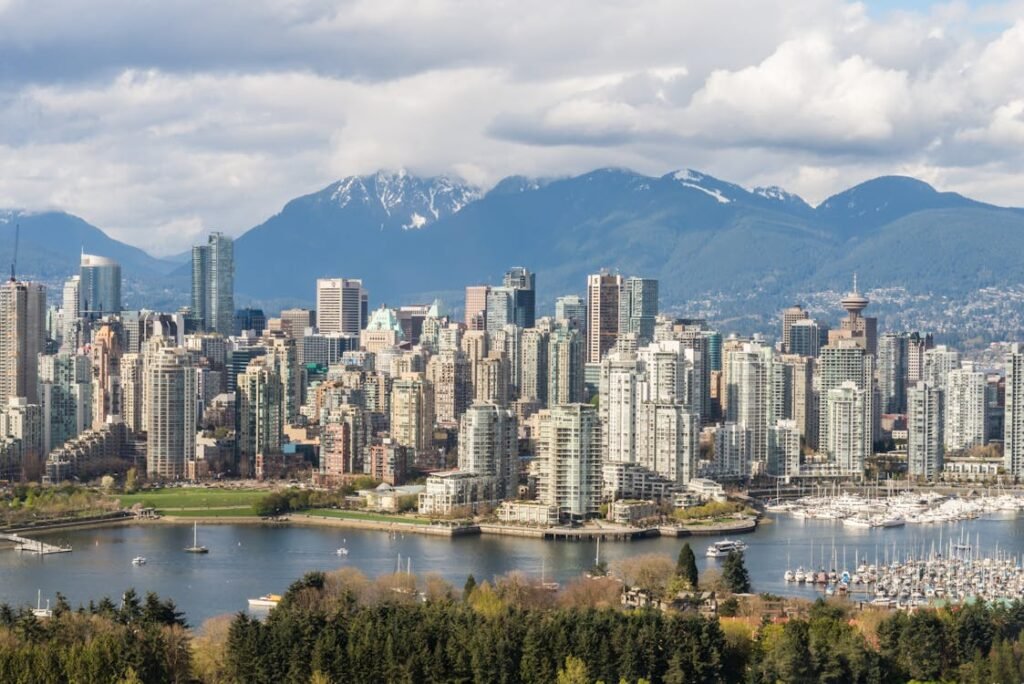
In the past decade, Metro Vancouver has shifted decisively toward multi-unit housing. The region’s new housing supply continues to shift towards higher-density forms, with apartments accounting for the majority of new starts and completions across the region.
This is according to a new report for the district’s Regional Planning Committee on the Metro Vancouver Housing Data Dashboard, summarizing a large collection of regional and municipal-level housing data from a variety of sources. The 2026 update replaces the hard copy Metro Vancouver Housing Data Book and provides policymakers, researchers and the public with a comprehensive and more accessible view of the region’s housing market.
Apartment Starts Dominate New Housing Supply
The report notes apartment starts consistently accounted for 60-to-80 per cent of all new housing starts, increasing from 16,899 units in 2016 to 21,844 units in 2025.
Apartment construction has remained the backbone of Metro Vancouver’s housing supply throughout this period. Even during years of economic volatility, rising interest rates and market slowdowns, apartment starts maintained a relatively stable upward trajectory.
The Structural Death of Detached Housing Construction
In contrast, single-detached starts have declined sharply and steadily, from 5,169 units in 2016 to 2,138 units in 2025, which is a decrease of about 60 per cent.
This means that over the past decade, Metro Vancouver has lost roughly two-thirds of its capacity to build new detached houses. But this is not a temporary blip caused by economic cycles — it is a structural, long-term trend driven by three converging forces: land constraints from urban growth boundaries, restrictive zoning bylaws at the municipal level, and soaring construction costs.
The policy accelerator: BC’s Single-Site Multi-Unit (SSMU) legislation, which took full effect in 2025–2026, mandates that the vast majority of single-family zoned lots province-wide can now be redeveloped for 3–4 unit (and up to 6-unit near transit) multiplex housing. The flip side of detached starts plummeting to 2,138 is that single-family lots are being systematically converted into townhouse and multiplex developments — the raw material for detached housing is being eliminated at its source.
Housing Starts vs. Completions: The Pipeline Time Bomb
Among the other key highlights of the update, overall housing starts have declined in recent years. Housing starts fell from 33,244 in 2023, to 28,112 in 2024 and 27,185 in 2025.
However, housing completions reached a record high in 2025, reflecting projects initiated earlier in the development cycle coming online. This divergence between declining starts and record completions is profoundly significant: it reveals the 3-to-5 year development pipeline lag inherent in high-density construction.
The units being delivered today are projects initiated during the 2020–2022 ultra-low-rate boom or in the early days of rate hikes. The suppressive effect of high interest rates on new starts over the past two years will manifest in a supply cliff during 2028–2030 completions — when the current wave of slowed construction finally hits delivery. Investors and policymakers should watch this pipeline divergence as a leading indicator.
Rental Market Trends: The 3.7% Vacancy Rate Illusion
Purpose-built rental housing has continued to expand, with rental vacancy rates rising to 3.7 per cent in 2025, the highest level observed in more than three decades, the report notes.
Rents continued to rise across the region, though the pace of increase slowed compared to recent peak years.
The context behind 3.7%: For a Metro Vancouver market that has long operated at vacancy rates below 1%, this spike warrants careful calibration. The rise must be viewed against the backdrop of 2025–2026 federal and provincial policy tightening on non-permanent residents (NPRs), including international students and temporary workers. Large-scale removal of temporary residents has created a structural, likely temporary vacuum in rental demand.
This elevated vacancy rate is also concentrated in specific new high-density condo communities. As new starts slow — which they already are — the fundamental supply-demand imbalance in core Metro Vancouver areas will reassert itself. Rental property investors should not be deterred by headline vacancy figures; the long-term structural shortage remains intact.
Rental condominiums are growing at a much faster rate than the total stock of condominiums across Metro Vancouver. The overall condominium stock grew 21.4 per cent from 2020 to 2025, while the rental condominiums grew 38.8 per cent — nearly double the pace.
This data point carries deep implications: as high home prices in Metro Vancouver make homeownership increasingly out of reach, the proportion of condos bought for owner-occupation is declining. A growing share of private capital and individual investors are pushing condos into the rental market to offset carrying costs, fundamentally altering the supply structure of the rental sector.
Municipal Housing Snapshots: Delta’s Hidden Message
The City of Delta earlier this year released its own Housing Snapshot, a map giving residents an opportunity to get a grasp of higher density developments that are under review, under construction or have recently been completed since the new Official Community Plan was approved nearly two years ago.
At the time, the city noted it had issued building permits for more than 1,200 units that were under or close to construction. Council had given third readings for approximately 2,000 apartment and townhouse units and welcomed the completion of 282 non-market rental apartment units.
Why Delta matters: Historically, Delta has been one of the most conservative cities in Metro Vancouver on high-density development — one of the last holdouts defending detached-house-only red lines. The fact that Delta passed a new Official Community Plan two years ago and is now aggressively issuing high-density permits carries a landmark示范 (demonstration) effect: even the most resistant municipalities are now fully capitulating to density. This is a bellwether for the entire region.
What This Means for the Market
Metro Vancouver’s housing data dashboard paints a clear picture: the region is undergoing an irreversible transformation from detached-house-dominated communities to higher-density, multi-unit housing. The data tells a story of structural change driven by land constraints, aggressive zoning reform (2024–2026), and evolving market demand.
For first-time buyers: The shrinking detached housing supply means increasingly turning to apartments and townhomes as the primary entry point. This is no longer a preference — it is the only viable path.
For investors: The growth in rental condominiums signals a deepening rental market. But the 3–5 year pipeline lag means today’s high completions will be followed by a significant supply slowdown around 2028–2030. Timing matters.
The bottom line: The combination of record completions, rising vacancy rates and slowing rent growth could create a window for rental property investors. But the fundamental trend — denser, multi-unit housing as the default form of new construction in Metro Vancouver — is set to continue for the foreseeable future. The region is moving toward a Hong Kong/Singapore model of high-density living, and the data makes clear: this is not a phase. It is the new normal.