
Canada Housing Affordability at Four-Year Best: Condos Near Pre-Pandemic Levels, But Has Buying Really Become Easier?
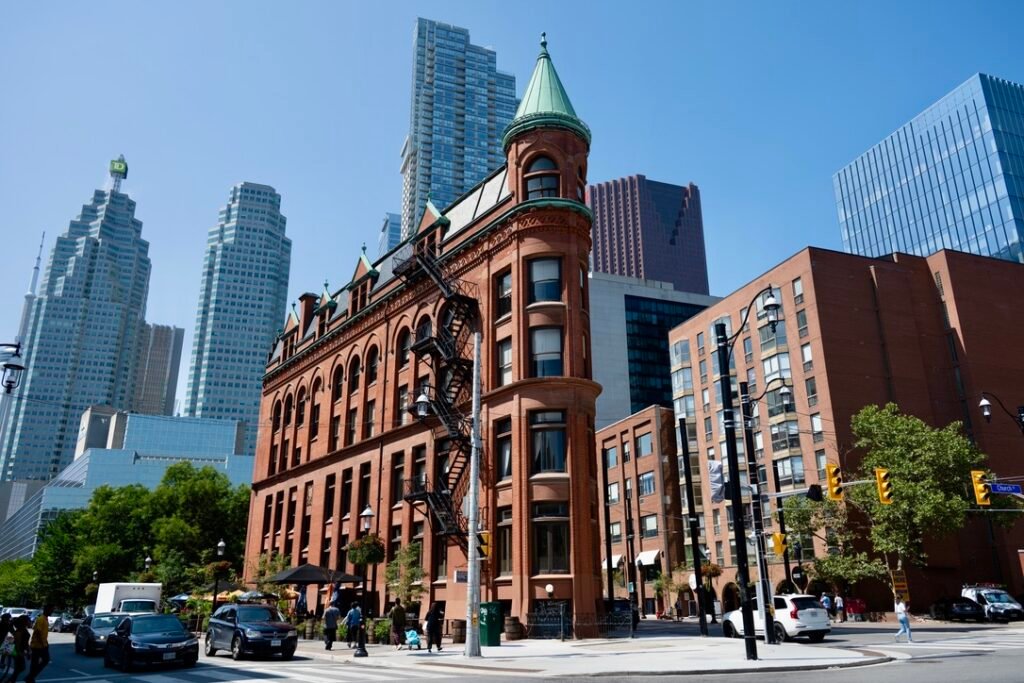
Canada Housing Affordability at Four-Year Best: Condos Near Pre-Pandemic Levels, But Has Buying Really Become Easier?
——RBC Q1 2026: National Index Falls to 53%, Vancouver and Toronto See Biggest Gains but Remain Most Expensive, Montreal Deteriorates
Data source: RBC Economics 2026-06-29 | CMHC 2026-02-10 | Demographia 2026
📢 RBC Q1 2026 Housing Affordability Report: National index falls to 53%, the best level in four years. Condos lead the improvement — the national condo affordability measure is now 35.2%, close to pre-pandemic levels. But RBC warns: improvement momentum is fading — prices are stabilizing, rates have bottomed, and further gains will depend heavily on income growth. Montreal, Quebec City, and St. John’s are deteriorating.
📌 Four-Year Best, But Has Buying Really Become Easier?
On June 29, 2026, RBC Economics released its Q1 2026 Housing Affordability Report. The data is encouraging: the national affordability index fell to 53%, the ninth consecutive quarter of improvement and the best level in four years. Vancouver and Toronto saw the largest improvements — though they remain Canada’s least affordable markets.
Condos are the biggest winners. The national condo affordability measure has dropped to 35.2%, less than one percentage point from pre-pandemic levels. Toronto’s condo index has even fallen below Q4 2019 levels (36.1% vs 38.5%).
But RBC’s report carries a clear warning: the momentum for affordability improvement is fading. With prices stabilizing and rates bottoming, further gains will depend almost entirely on income growth — and labour market weakness is likely to limit that source. RBC Assistant Chief Economist Robert Hogue said: “We are likely approaching the end of the affordability recovery phase.”
Core thesis: The affordability improvement is real, but it is essentially a one-time benefit from “price correction + rate decline.” With these two engines stalling, Canada’s housing affordability challenge is far from over — structural imbalances remain deeply entrenched.
I. National Picture: 53% — Four-Year Best, But Still in Historically Elevated Territory
Section conclusion: The national affordability index at 53% is the best in four years, but it remains in historically elevated territory. While it has improved significantly from the 2022 Q2 peak of 60% (which exceeded the 1990 high of 57%), it is far from a “normal” affordable range.
📈 Improvement Trajectory
- 2022 Q2 peak: 60% — exceeded the 1990 high of 57%, setting a record
- 2026 Q1: 53% — ↓7 percentage points, nine consecutive quarters of improvement
- Drivers: Price corrections (especially condos) + rate declines (BoC from 5.0% to 2.25%) + modest income growth
- Key limitation: 53% remains far above the “affordable” threshold (should be below 33%). Canada’s housing affordability is still clearly stretched and has not returned to a normal range.
🌍 International Comparison: Canada Remains One of the Least Affordable Markets Globally
- Demographia 2026: Canada’s median multiple is 5.4 — classified as “severely unaffordable”
- Global ranking: Canada ranks behind the U.S. (4.5) and the U.K. (5.2), among the least affordable globally
- Vancouver: 10.8x — one of the most unaffordable cities globally, behind only Hong Kong, Sydney, San Jose, and Adelaide
- Toronto: 7.6x — “severely unaffordable,” ranked 81st globally
💡 RBC’s warning: Short-term affordability gains driven by rate policy are unsustainable. Without further structural changes, Canada risks “intergenerational housing lockdown” — an entire generation permanently locked out of homeownership.
II. Condos Lead: National Index at 35.2%, Toronto Below Pre-Pandemic
Section conclusion: Condos are the biggest winners in this affordability recovery. The national condo index at 35.2% is close to pre-pandemic levels. Toronto and Victoria have even fallen below Q4 2019 levels, but Montreal, Quebec City, and Halifax condo affordability remains tight.
📊 National Condo Data
- 2026 Q1: 35.2% — within one percentage point of pre-pandemic levels (Q4 2019)
- Improvement magnitude: Condo price corrections have been sharper than other housing types, making them the primary driver of affordability recovery
- Comparison to composite: Condo index (35.2%) is far below the composite index (53%), confirming that condos are the most accessible entry point in today’s market
🏙️ City Condo Comparison
- Toronto: 36.1% — below Q4 2019 level of 38.5%
- Victoria: 31.8% — below Q4 2019 level of 32.2%
- Montreal: Condo index surpassed Toronto for the first time in 16 years — reflecting Montreal’s price resilience (+5.5% YoY)
- Halifax: Condo index is closing in on Toronto — less than 3 percentage points apart, the closest in over a decade
III. City Divergence: Vancouver and Toronto Show Largest Improvements But Remain Most Expensive, Montreal Deteriorates
Section conclusion: RBC’s report reveals a “K-shaped divergence” — Vancouver and Toronto show the largest improvements but remain the least affordable; Montreal, Quebec City, and St. John’s are deteriorating; Calgary is approaching normalization; Saskatoon is among the least pressured markets.
| City | Composite Index | Long-Term Average | Trend | Status |
|---|---|---|---|---|
| Vancouver | 84.1% | — | ↓4 ppt(Q1) | Worst in Canada |
| Toronto | 65.2% | — | ↓2.2 ppt | Second worst |
| Montreal | 52.6% | — | ↑Deteriorating | Worst since 1990 |
| Calgary | 41.5% | 39.8% | Improving | Near normalization |
| Saskatoon | 32.1% | 30.9% | Modest improvement | Least pressured |
💡 Key observation — Montreal’s “contrarian” trend: Montreal is the only major market where affordability is still deteriorating. Prices rose 5.5% YoY, pushing the RBC index to 52.6% — the worst since 1990. The condo index even surpassed Toronto for the first time in 16 years.
IV. Three Indicators, Three Truths: RBC vs Demographia vs CMHC
Section conclusion: The RBC index measures “carrying costs” — a short-term monthly payment reprieve. Demographia measures “price-to-income ratio” — a structural total-price tension. CMHC’s outlook provides supply-side and rental market context.
| Indicator | RBC Affordability Index | Demographia Median Multiple | CMHC 2026 Outlook |
|---|---|---|---|
| What it measures | Carrying cost as % of pre-tax income | Median home price / Median household income | Starts, sales, rentals, price forecasts |
| 2026 latest data | National 53% · Condo 35.2% | Canada 5.4 · Vancouver 10.8 · Toronto 7.6 | National sales 489,000 · Avg price $698,000 |
| Core conclusion | Short-term improvement — monthly payment relief | Structurally still expensive — down payment and total price remain high | Supply and demand both cooling — 2026 GDP only 0.7%, unemployment remains elevated |
| Meaning for buyers | Monthly payment pressure eased, but rates and prices must remain stable | Down payment and total price still high — structural barriers haven’t fallen | Rental market softening, no rush to buy; Ontario is the only province expected to see price declines in 2026 |
💡 Key insight: CMHC’s February 2026 outlook shows Canada’s 2026 GDP growth at just 0.7%, with unemployment still high and population growth near zero. Ontario is the only province expected to see price declines in 2026. Starts are forecast to decline through 2028 — supply-side contraction is underway. This means: affordability improvement is driven by “demand-side weakness,” not “supply-side improvement.”
V. Fading Momentum: Why Further Improvement Will Depend Entirely on Income Growth
Section conclusion: RBC explicitly warns that the “low-hanging fruit” of affordability improvement has been picked. Prices are stabilizing, rates have bottomed, and further improvement will depend almost entirely on income growth — while labour market weakness may limit that source.
📉 Three Engines Stall
- Price correction ending: Most major markets have stabilized — further downside is limited
- Rates bottomed: RBC expects no further BoC rate cuts in 2026
- Income growth lagging: Labour market weakness limits wage growth — RBC expects meaningful income growth “likely a 2027 story”
🔮 RBC Outlook
- Short-term (2026): Affordability “will not materially deteriorate,” but “room for further improvement is very limited”
- Medium-term (2027): Labour market may tighten, supporting stronger wage growth — but “that’s a 2027 story”
- Uncertainty: Trade war and geopolitical tensions could delay recovery
VI. HousingAI Three-Layer Framework: More Than Just an RBC Summary
Section conclusion: Behind the affordability improvement are three forces — mechanical improvement from rate declines, condo price corrections lowering entry barriers, and structural pressure from income growth lagging behind home prices and carrying costs.
BoC from 5.0% to 2.25% directly lowered monthly carrying costs. This was the most direct driver of affordability improvement — but it was one-time. Rates have bottomed; further improvement must come from income growth.
Condo prices corrected more sharply than other housing types, bringing the condo affordability index (35.2%) close to pre-pandemic levels. Toronto and Victoria have even fallen below Q4 2019 — this is a real entry-level price decline.
Income growth has consistently lagged behind home prices and carrying costs. Demographia data (Canada at 5.4x) shows that while monthly payment pressure has eased, down payment and total price barriers remain extremely high. This is the core structural tension.
VII. Conclusion: Short-Term Relief, Not Systemic Reversal
📌 HousingAI Independent Analysis
The 2026 affordability improvement is not that homes have truly become cheaper — it’s that rates and condo corrections have given buyers a breath of oxygen. This is “short-term relief, not systemic reversal.”
- First, the real story is not the national 53% — it’s structural divergence. Toronto Condo affordability has returned to pre-pandemic levels; Montreal single-detached affordability is still deteriorating; Calgary/Edmonton are normalizing; Saskatoon is the least pressured. These divergences matter far more than the national number.
- Second, Canada’s housing market is not in a broad recovery or a broad crash — it’s entering a new phase of “city fragmentation + housing-type fragmentation + income constraints.” Condos offer an entry point, but detached homes remain out of reach.
- Third, fading momentum means future improvement depends entirely on income growth. RBC forecasts “that’s a 2027 story” — and CMHC’s outlook shows 2026 GDP at just 0.7%, with unemployment still elevated. The outlook for income growth is not optimistic.
- Fourth, supply-side contraction is underway. CMHC forecasts starts will decline through 2028 — this is a warning of future supply shortages, not good news for affordability.
For potential buyers, the core takeaway is: The condo market offers a real, affordable entry point — especially in Toronto and Victoria where prices have fallen below pre-pandemic levels. But the detached home market remains out of reach — and without structural reform, that reality is unlikely to change.
⚠️ Risk Warning: This analysis is based on publicly available data from RBC Economics, CMHC, Demographia, and other sources. It does not constitute investment advice. Markets carry significant regional variations and downside risks. Please consult licensed professionals for individual decisions.
- RBC Economics. (2026, June 29). Improving housing affordability continues in most Canadian major markets. https://www.rbc.com/
- RBC Economics. (2022). Buying a home has never been so unaffordable in Canada. https://www.rbc.com/
- CMHC. (2026, February 10). Housing Market Outlook 2026. https://www.cmhc-schl.gc.ca/
- Demographia. (2026). 2026 International Housing Affordability Report.
- MPA Mag. (2026). It’s official: Canada is one of the world’s least affordable housing markets. https://www.mpamag.com/
© 2026 HousingAI · Canadian Housing Market Data Center
Data sources: RBC Economics | CMHC | Demographia
This report is based on public data for analytical purposes only and does not constitute investment advice of any kind.