
Saskatoon Home Prices Hit Record $435,200 as Saskatchewan Inventory Crisis Deepens, Bidding Wars Normalize
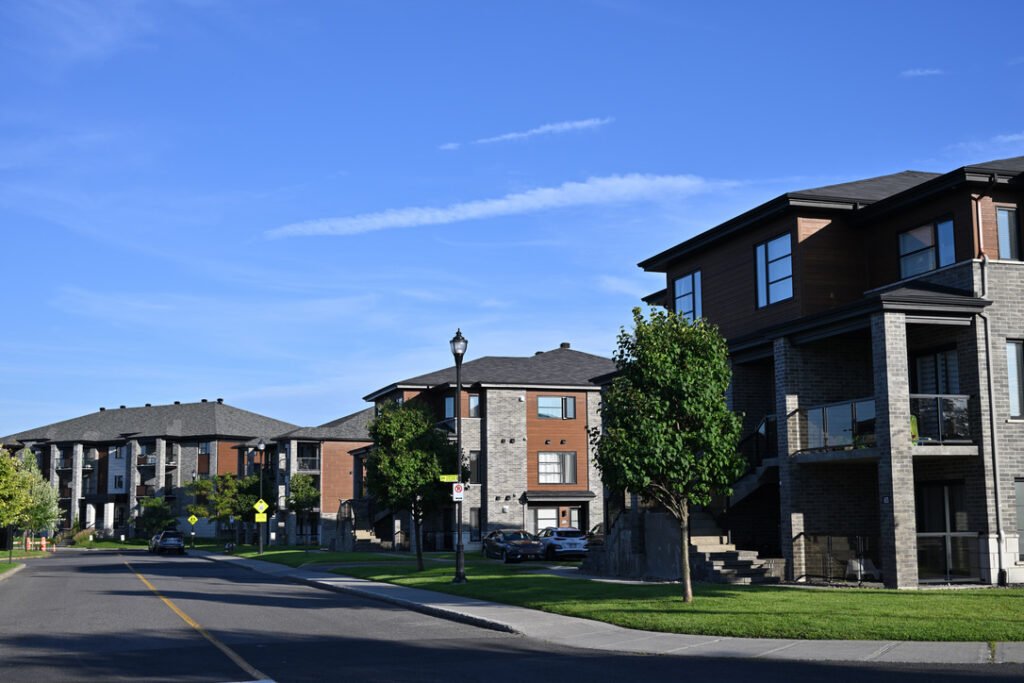
Saskatoon Home Prices Hit Record $435,200 as Saskatchewan Inventory Crisis Deepens, Bidding Wars Normalize
In April 2026, the Canadian housing market presents a rare regional divergence. While Toronto prices are down 6.7% year-over-year and Vancouver detached homes remain near their bottom, Saskatchewan home prices have hit all-time highs — against the national trend.
According to the Saskatchewan Realtors Association’s latest data released in April 2026: the provincial residential benchmark price reached $374,100, up more than 6% year-over-year; Saskatoon’s benchmark hit a record high of $435,200; Regina’s benchmark also set a new record at $343,700. More notably, all 18 real estate regions in Saskatchewan posted year-over-year price increases — not a single exception.
相关视频解读
视频来源:北美在线(YouTube @139)
This stands in stark contrast to most regions in BC, Alberta, and Ontario, where prices are falling and inventory is rising. Saskatchewan Realtors Association CEO Chris Guérette stated bluntly: “We are seeing record prices not because demand is accelerating, but because there simply are not enough homes available.“
In April 2026, the Canadian housing market is experiencing rare regional divergence. According to the Saskatchewan Realtors Association’s latest data:
- Provincial residential benchmark price: $374,100, up more than 6% year-over-year, significantly up from February’s $363,800
- Saskatoon benchmark price: $435,200, a record high
- Regina benchmark price: $343,700, also a record high
More notably, all 18 real estate regions in Saskatchewan posted year-over-year price increases — not a single exception. This contrasts sharply with most regions in BC, Alberta, and Ontario, where prices are falling and inventory is rising. For investors tracking Canadian housing price trends, Saskatchewan’s uniqueness deserves close attention.
Saskatchewan Realtors Association CEO Chris Guérette stated bluntly: “We are seeing record prices not because demand is accelerating, but because there simply are not enough homes available.“
| Indicator | Saskatchewan (Province) | Saskatoon | Regina |
|---|---|---|---|
| Residential Benchmark Price | $374,100 | $435,200 (record high) | $343,700 (record high) |
| YoY Change | +6% | +3.2% | +6% |
| Inventory Level | Approx. 1.6 months | Under 2 months | Approx. 1.6 months |
| New Listings | 1,808 (25% below 10-year avg) | Improved but still 10% below 10-year avg | -4% YoY, 20% below 10-year avg |
| Sales | 1,256 units | -4% YoY | +5% YoY |
What does “1.6 months of inventory” mean? Saskatchewan Realtors Association CEO Guérette’s explanation is direct and unsettling: “That means if no new homes are listed right now, the market could run out of listings in just over a month. That’s a little bit scary.”
Saskatchewan’s current inventory level is about 50% lower than normal levels for this time of year. Inventory in the Regina-Moose Mountain area is 64% below the 10-year average — an extreme signal of supply depletion. This is similar to the logic behind Calgary’s detached supply depletion, but Saskatchewan’s supply tightness is more widespread and extreme.
The dual logic behind seller reluctance:
- Homeowners who bought at 2020-2022 lows: facing higher replacement costs, many choose to “hold on”
- Spring listing delays: this year’s late winter has delayed the traditional spring listing surge
“In a normal year, this time of year I’m showing anywhere from 50 to 70 houses. Right now I’m showing maybe 10. So it’s very noticeable.”
—— Regina Realtor Peter Fourlas
The “triple squeeze” buyers are experiencing:
1. Extreme lack of choice
First-time homebuyer Patrick Arno and his wife, searching for a single-family home in Saskatoon, described the experience as “finding a needle in a haystack.” They wanted an open concept home with space for their dog, a garage, and potential for a basement suite — but there were hardly any listings that met all their criteria.
2. Bidding wars have become normal
Coldwell Banker Local Realty broker Brin Werrett noted: “When there’s competition, multiple offers, people are stepping up to the plate thinking they might not have another chance.”
Century 21 Fusion agent Alyson Anderson revealed that in the past month, the average overbid she’s seen hovered around $34,000 to $36,000, with some offers going as high as $120,000 over asking.
3. Two types of buyers “exiting the market”
Fourlas observed buyers splitting into two camps: those willing to overbid (“thinking they might not have another chance”) and those choosing to exit (“don’t want to compete, don’t want to overpay, are exercising patience”).
This buyer dilemma stands in stark contrast to the Toronto GTA buyer’s market — in Toronto, buyers have greater bargaining power; in Saskatchewan, buyers face intense competition and limited choices.
🏙️ Saskatoon
Benchmark price: $435,200 (highest in province, record high)
Sales: -4% YoY
New listings: Improved but still 10% below 10-year average
Inventory: Under 2 months
Saskatoon has the highest prices in the province, but sales have begun to decline year-over-year. This may indicate that prices have hit the affordability ceiling for some buyers, or that supply shortages are starting to suppress transactions.
🏛️ Regina
Benchmark price: $343,700 (record high)
Sales: +5% YoY
New listings: -4% YoY, 20% below 10-year average
Inventory: Approximately 1.6 months
Regina has the tightest supply in the province. New listings are down year-over-year, but sales are still growing — this combination of “supply contraction + demand growth” is the strongest support for prices.
📊 Saskatchewan vs. National: The “Affordability Advantage” Remains
Despite record-high prices, compared to the national benchmark price of $663,828, Saskatchewan home prices are still just over half the national level. This is the fundamental reason why Saskatchewan continues to attract interprovincial migrants and first-time buyers.
This supply-depletion-driven price increase is fundamentally different from the Vancouver detached bottom signal — Vancouver shows early signs of demand recovery, while Saskatchewan represents an extreme case of supply depletion.
Saskatchewan Realtors Association CEO Guérette said that as the spring market continues, the big question is: Will inventory improve, or will prices keep climbing?
She believes there’s only one solution: “What we need right now is more inventory — people either willing to sell their home because they’re moving up and down that housing continuum, or building more homes.”
Broker Werrett’s forecast is more direct: “If we had twice as many listings right now, things would be a lot more balanced and prices might stabilize a little bit more.”
Until then, Saskatchewan buyers will continue to face the “needle in a haystack” dilemma, while sellers enjoy the strongest pricing power in years.
For investors, understanding this housing class divergence trend is crucial — Saskatchewan’s uniqueness means you cannot apply national logic to it.
📌 Conclusion: Saskatchewan — The Most Unique Story in Canada’s Housing Market
In April 2026, Saskatchewan is the most unique “exception” in the Canadian housing market — while most of the country is digesting inventory and facing price pressure, Saskatchewan is experiencing supply-depletion-driven price increases.
Key Takeaways:
- Saskatchewan home prices hit record highs, with all 18 regions posting increases
- Inventory at just 1.6 months — 50% below normal levels, 64% below average in Regina area
- Buyer options have plummeted from “50-70 homes” to “just 10 homes,” with bidding wars now normal
- Saskatoon at $435,200 and Regina at $343,700 both set new records
- Saskatchewan prices are still just over half the national level — the affordability advantage remains
- Supply depletion — not surging demand — is the fundamental driver of price increases
For buyers, Saskatchewan offers the most competitive, most choice-limited window in years; for sellers, it offers the strongest pricing power; for investors, Saskatchewan’s uniqueness means you can’t apply national logic to it.
Visit HousingAI.ca for more in-depth analysis of the Canadian housing market.
—— HousingAI · Data-driven real estate insights
📚 Sources & Further Reading
Primary Sources: Saskatchewan Realtors Association April 2026 report, CTV News, Yahoo Finance Canada, CKOM News, 620 CKRM.
Data Period: March 2026 monthly data, reports released April 6-11, 2026.
Further Reading: Canada Housing Market Weekly | Toronto GTA Market Weekly | Vancouver Market Weekly | Montreal Market Weekly | Calgary Market Weekly
Disclaimer: This analysis is based on public data and does not constitute investment advice. Real estate markets involve risk; decisions require caution.
HousingAI · Data-driven real estate insights · Saskatchewan Housing Market Deep Dive
Data as of April 12, 2026. Based on Saskatchewan Realtors Association and multiple media reports.