
Vancouver Condo Market 2026: Prices Down 7.8%, Inventory 38% Above 10-Year Average — Buyer’s Window or Bottom Trap?
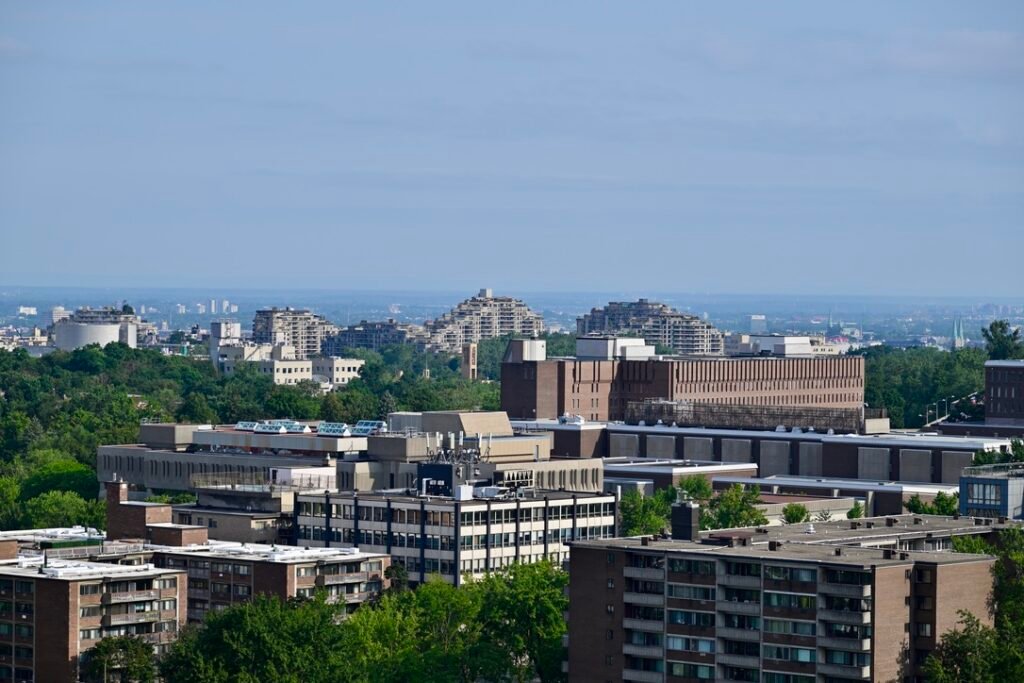
While Vancouver detached home sales rose 8.3% year-over-year, signaling a potential bottom, the condo market remains trapped in a deep freeze. According to the Greater Vancouver Realtors (GVR) March 2026 official report, condo sales totaled just 999 units, down 7.8% YoY (compared to 1,084 in March 2025); the benchmark price fell to $706,700, down 7.8% YoY and 0.2% MoM, erasing most pandemic-era gains and returning to pre-2018 levels. More concerning, active condo listings reached 6,354 units, 38% above the 10-year average, creating a visible “supply bottleneck.” GVR Chief Economist Andrew Lis commented: “Multi-family (condo) sales remain weak, and the market is in a typical ‘wait-and-see’ state.”
This stands in sharp contrast to Montreal detached homes rising 7% against the national trend, revealing the essence of Canada’s “K-shaped divergence” — property types with strong employment fundamentals and supply scarcity are decoupling from the macro cycle, while condos, reliant on investment demand and dense supply, face a prolonged clearing process.
相关视频解读
视频来源:北美在线(YouTube @139)
▌ 2018-2022: Rising Cycle. Ultra-low interest rates and work-from-home demand during the pandemic drove rapid price appreciation. In April 2022, Greater Vancouver condo benchmark prices peaked at $785,800, up approximately 22% from March 2020.
▌ 2022-2025: Adjustment Period. The Bank of Canada’s aggressive rate hikes hit the condo market hardest. By the end of 2025, condo benchmark prices had fallen about 9% from their peak.
▌ 2026 Positioning: Entering the “New Normal” Buyer’s Market. Current condo benchmark prices are down 10.1% from peak. First-quarter 2026 cumulative sales are only 68.2% of the 10-year seasonal average, with market sentiment subdued. Statistics Canada’s Q4 2025 Household Wealth Report shows a slight decline in real estate assets, while the household debt-to-income ratio climbed to 177.2%.
▌ Overall Sales & Prices. In March 2026, Greater Vancouver condo sales totaled 999 units, down 7.8% YoY (from 1,084 in March 2025); benchmark price $706,700, down 7.8% YoY and 0.2% MoM. Average days on market reached 38 days, significantly longer than 29 days a year earlier, reflecting declining transaction efficiency.
▌ Inventory & Supply-Demand Ratio. Active condo listings hit 6,354 units, up 18.7% YoY, and 38% above the 10-year average. Total active listings across all property types reached 14,774 units. The condo sales-to-active-listings ratio (SNLR) was just 15.7%, well below the 20% buyer’s market threshold — a classic “buyer-dominant” pattern.
▌ Monthly/Quarterly Trends. Cumulative condo sales for January-March 2026 totaled approximately 2,650 units, the weakest first quarter since 2018. The pre-sale market is even more frozen — only 124 new condo pre-sales were recorded in BC in Q1 2026, the lowest on record. According to industry estimates, unabsorbed new condo inventory stands at approximately 7,000 units (some reports indicate completed and unabsorbed inventory exceeding 2,500 units, double last year’s level), putting enormous pressure on developers to clear inventory.
▌ Rental Market Weakness. According to latest data from Rentals.ca and CMHC, Vancouver condo rents have declined significantly year-over-year, with one-bedroom units seeing particularly sharp drops — overall condo rents down approximately 5.7%-7.5%. Rental yields have fallen to about 3.6%, below the 5-year mortgage rate (approximately 5.5%), leaving investors facing “negative cash flow.”
▌ Supply Side: Sharp Drop in New Starts + Accumulated Completed Inventory. Developers have significantly reduced new project launches due to weak pre-sales. In Q1 2026, new condo starts in Greater Vancouver fell approximately 45% YoY. However, projects launched during the peak years are still being completed and delivered. Industry estimates place unabsorbed new condo inventory at approximately 7,000 units (some reports indicate completed and unabsorbed inventory exceeding 2,500 units, double last year’s level), representing 6-8 months of supply. At current absorption rates, full inventory clearing will take until the second half of 2027.
▌ Demand Side: First-Time Buyers and Investors Both on the Sidelines. The rental market is equally weak — according to Rentals.ca data, average one-bedroom condo rents in Vancouver have fallen approximately 7.5% YoY to around $2,150, pushing rental yields down to about 3.6%, below 5-year mortgage rates. Investors face “negative cash flow” and have little incentive to enter the market. First-time buyers remain constrained by high interest rates and mortgage stress tests — despite price corrections, purchasing power has not yet returned to 2019 levels.
▌ Demographics & Immigration: Condos Hit Hardest. Canada experienced a net outflow of approximately 80,000 temporary residents in 2025, most of whom previously rented condos. International student visas are expected to be cut by another 30% in 2026, directly driving up vacancy rates for small-unit condos in core areas. On interprovincial migration, BC saw a net loss of approximately 12,000 people in 2025, further weakening demand fundamentals.
Faced with a frozen pre-sale market, developers have been forced to innovate. Wesgroup’s ACE project launched a “try before you buy” program in April 2026 — allowing buyers to spend a weekend living in the condo before making a decision. This is the first large-scale trial-stay marketing initiative in Greater Vancouver, aimed at lowering the decision-making threshold for first-time buyers. Initial feedback shows a conversion rate of approximately 15%, higher than the industry average of 8%.
Other developer incentives include: direct price cuts of 3-5%, free strata fees (1-2 years), mortgage rate subsidies, and free furniture packages or parking spots. However, these measures are more about “price reduction promotions” than “demand creation,” with limited effectiveness. Pre-sale financing pressure is intensifying, and some small-to-mid-sized developers have delayed or canceled new projects.
▌ For Owner-Occupant Buyers: This is the period of greatest bargaining power in recent years. Focus on relatively resilient regions (e.g., East Vancouver, Surrey) and 2-3 bedroom units (supported by family demand). Calculate the “rent-to-price ratio” before purchasing — if monthly rent ÷ price > 4%, buying is better than renting. Don’t try to “time the exact bottom” — make decisions based on a 5+ year holding period. Monitor local job markets (unemployment below 6%) and changes in months of inventory. Negotiate with sellers for 5-8% discounts or concessions (e.g., free furniture, strata fee reductions, parking).
▌ For Investors: The current condo market is unfriendly to investors — rental yields (approximately 3.6%) are below financing costs (5.5%), making “negative cash flow” the norm. Unless paying all cash or with a down payment over 50%, entry is not recommended. If still considering investment, choose lower-priced 2-3 bedroom units in suburbs (more stable tenant base) and prepare for a 7-10 year holding period. Avoid small units in core areas, which face the greatest vacancy risk and price downside pressure.
▌ Action Checklist: ① Track GVR months of inventory and SNLR data monthly; ② Calculate rental yield for target properties (be cautious if below 4%); ③ Negotiate for 5-8% discounts or concessions; ④ Prioritize post-2015 built resale units (avoid older condo repair risks); ⑤ Secure mortgage pre-approval before signing to avoid rate fluctuation impact on purchasing power.
📌 Core Conclusion: Buyer’s Window Is Open, But “Bumps” Remain
Vancouver’s condo market is in a typical “buyer’s market” phase — high inventory (6.4 months), soft prices (down 7.8% YoY), and bargaining power tilted toward buyers. GVR Chief Economist Andrew Lis confirms: “Multi-family (condo) sales remain weak, and the market is in a typical ‘wait-and-see’ state.” However, this does not mean the “bottom-fishing opportunity” has matured. The combination of national condo oversupply and Vancouver’s unique inventory pressure means this correction will be protracted rather than a V-shaped reversal.
Unlike Montreal detached homes’ countertrend rise, Vancouver condos lack the dual support of a “jobs moat” and “supply scarcity.” For owner-occupant buyers, this is the period with the most choices and greatest bargaining power in years, but they must accept the reality that “prices may continue to drift slightly lower after purchase.” For investors, unless pursuing long-term holding (7-10 years) and able to tolerate negative cash flow, staying on the sidelines is prudent. The most important task is not predicting the bottom, but assessing personal financial capacity, holding period, and local fundamentals.
One-sentence summary: Vancouver’s condo buyer’s window has opened, but the bumps are not over. Owner-occupants can selectively enter, while investors should patiently wait for inventory peak signals.
Data Sources: Greater Vancouver Realtors (GVR) March 2026 Market Report; BC Real Estate Association (BCREA) Q1 2026 Forecast; Statistics Canada Q4 2025 Household Wealth Report; Rentals.ca March 2026 Rent Report.
—— HousingAI · Data-Driven Real Estate Insights
HousingAI · Data-Driven Real Estate Insights · Vancouver Condo Deep Dive
This report does not constitute investment advice. Market risks exist; decision-making requires caution. Data as of April 13, 2026, based on GVR March 2026 official report.